Climate dreams: when eco-anxiety follows you into sleep
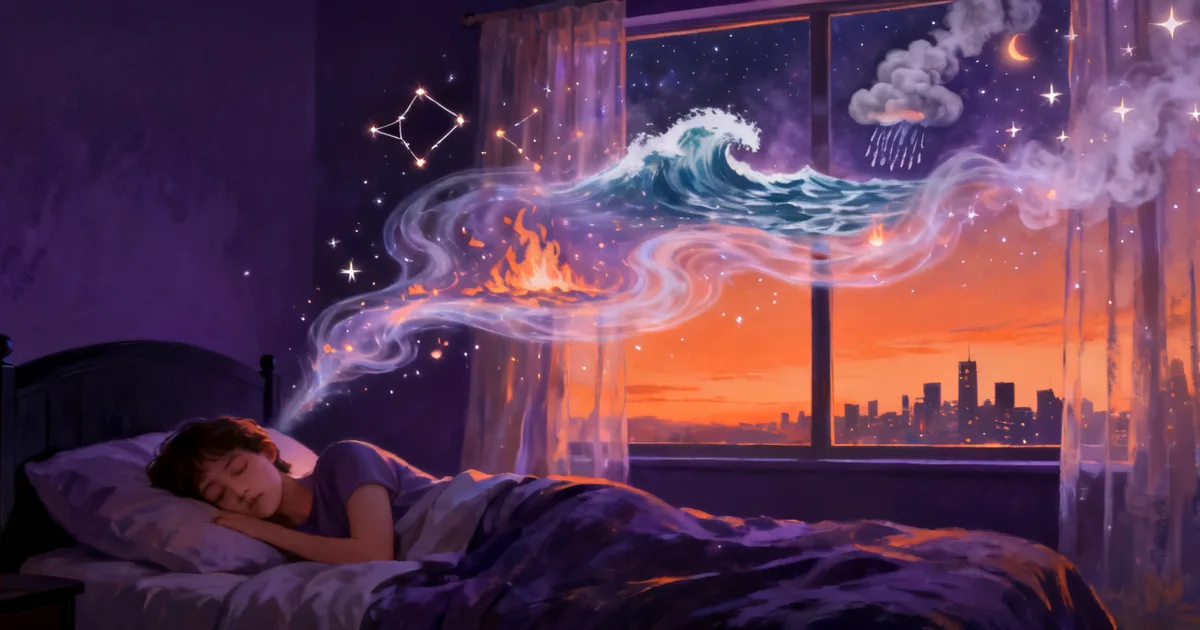
The water is already under the door, or the hill behind the house glows orange. You wake with your heart racing, and the news you scrolled before bed comes straight back. Climate dreams like these are an understandable echo of eco-anxiety. They predict nothing, and a few habits can calm these nights.
This page is informational and does not replace medical or psychological advice. If climate anxiety keeps weighing on your sleep or your days, a health professional can help.
Quick answer
Dreams tend to reuse what worries you by day, and hot nights wake you more often, so you remember more of them. Climate dreams are not premonitions. Noting them with their context shows what feeds them; if they spoil your sleep or your days, talk to a professional.
Does eco-anxiety follow you to bed?
In a Lancet Planetary Health survey of 10,000 people aged 16 to 25 in ten countries, 59% were very or extremely worried about climate change, and over 45% said these feelings affected their daily life.
Worry is only part of it. A 2026 review of 48 studies on young people also describes grief, anger, powerlessness, guilt and hope. A 2025 meta-analysis links climate anxiety to lower well-being, but also to more climate action.
Sleep is in the picture too: the Climate Change Anxiety Scale includes the items “Thinking about climate change makes it difficult for me to sleep” and “I have nightmares about climate change.” After a summer of heatwaves and stifling nights, many people go to bed already loaded.
Why does the climate show up in your dreams?
Dreams largely reuse the concerns of waking life; researchers call this continuity. Flood alerts, smoky skylines and worried conversations give them plenty of material.
Dream researcher Kelly Bulkeley expects fires, floods and heat to bring more nightmares, and notes that disaster survivors often report recurring ones. That is a forecast, not a measured trend.
The night plays a role too. Heat fragments sleep, and each brief night waking is a chance to catch the dream you were in, sometimes the most intense one. If those fragments turn into nightmares, the guide to nightmares during heat or stress helps sort out the causes.
What these dreams can mean, and what they cannot
Dreaming of a flood does not announce a flood. Precognitive dreams fascinate people, but research mostly finds coincidence and memory bias. A climate dream is closer to a snapshot of what occupies you, and how it feels.
The images still carry personal meaning. Water or a flood can echo feelings that overflow; fire can go with anger or fast change. The guide to anxiety dreams shows how to link these images to your waking life.
Fictional example of a journal entry:
- Dream: “The river reached our street. I kept carrying boxes upstairs, and the water kept rising.”
- Emotion: “Helplessness, then anger that nobody was helping.”
- Context: “Hot night, woke twice. Flood footage before bed. Tense week at work.”
- Question to keep: “What feels like it is rising too fast right now, and what am I carrying alone?”
How to journal climate dreams without letting them take over
- In the morning, note the striking image, the main emotion and what filled the day before: news, conversations, heat, night wakings.
- In the evening, pick a time after which you stop reading climate news.
- On hot nights, keep the bedroom as cool and dark as you can.
- By day, give the worry a concrete outlet: a conversation, a local group, one change you can actually make.
Over weeks, a dream journal shows whether these dreams follow certain reads, hot nights or conversations. If one nightmare keeps returning, the nightmare guide explains how to rewrite its ending while awake.
When should you talk to someone?
See a doctor or psychologist if nightmares come back most nights, if you dread going to sleep, or if climate anxiety gets in the way of work, studies or relationships.
Capture the dream, keep a hand on the feeling
When you wake up, say the dream out loud or type it. Noctalia transcribes it and keeps it in your journal, so you can read your climate dreams side by side and see what comes back.
FAQ
Is it normal to dream about climate disasters?
Yes, it is an understandable response. Dreams reuse the worries of the day, and heatwaves and alarming news give them plenty of material.
Are climate dreams premonitions?
No. They reflect emotions and images from your daily life, not the future. Read them as a sign of what weighs on you.
How can I calm climate dreams?
Stop climate news at a set time in the evening, keep the bedroom cool, and note the dream and its context in the morning. If the anxiety spills into your days, talk to a professional.
Sources and context
- Hickman et al., The Lancet Planetary Health (2021), climate anxiety in 10,000 young people.
- Simon Fraser University (2026), a review of young people's climate emotions.
- Global Environmental Change (2025), a meta-analysis on climate anxiety.
- Clayton and Karazsia (2020), the Climate Change Anxiety Scale.
- Kelly Bulkeley, Psychology Today (2023), “Nightmares of Climate Change.”
- Schredl and Hofmann (2003), continuity between waking life and dreams.
- Okamoto-Mizuno and Mizuno (2012), heat and sleep.
Updated October 9, 2026
Last updated: